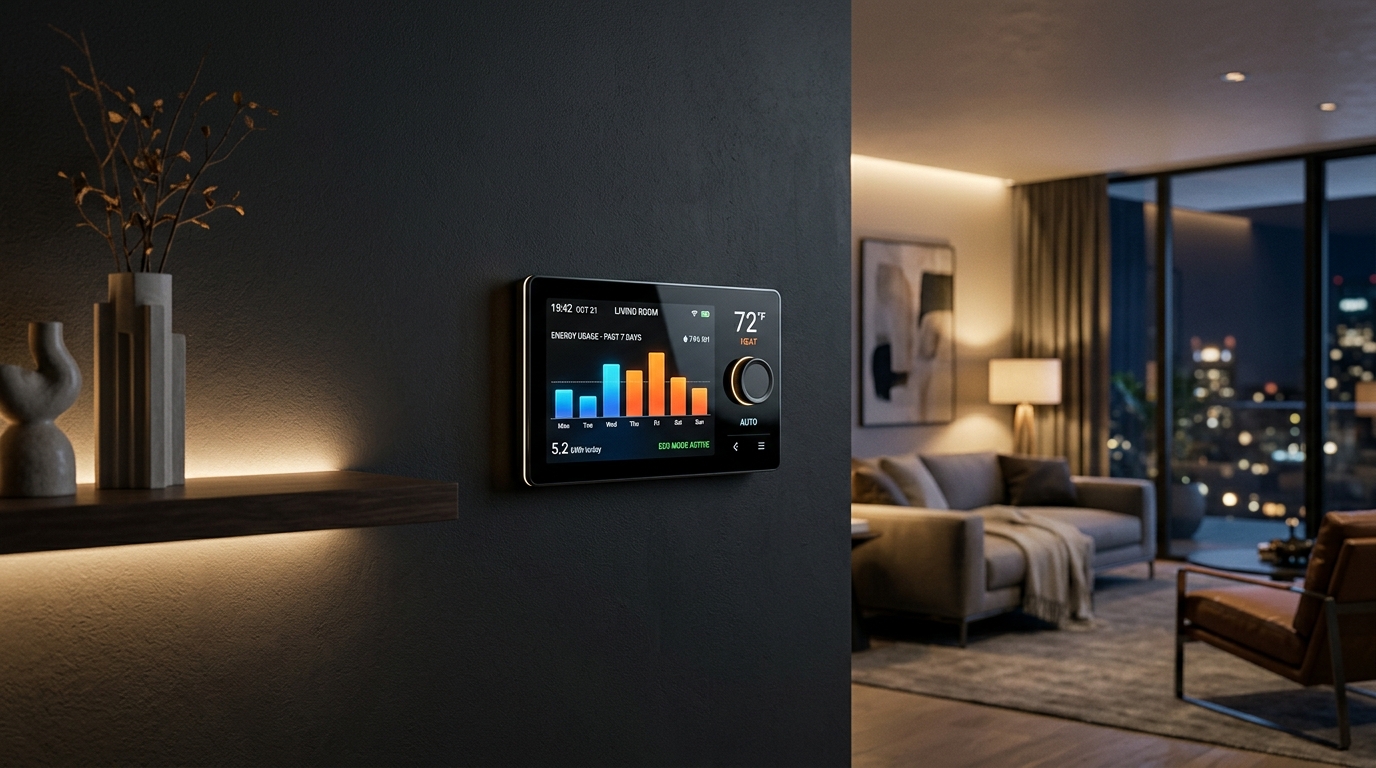
Residential electricity and natural gas bills represent one of the most volatile lines in household budgets. National electricity rates average approximately 18 cents per kilowatt hour in 2026, up nearly 37 percent over six years. Natural gas prices swing unpredictably with winter cold snaps. A household paying 150 dollars monthly a few years ago now routinely faces bills exceeding 220 dollars for the identical square footage.
The Three Levers of Energy Cost Control
Unlike municipal property taxes or state vehicle registrations, utility costs are not static. You maintain direct control over when power is consumed, how efficiently your home retains temperature, and which rate schedule your utility uses to calculate your bill. Lowering your monthly statement requires pulling three distinct levers:
Optimizing climate schedules, eliminating phantom standby power, and shifting major appliance cycles to off peak windows.
Installing smart thermostats, sealing thermal envelope air leaks, and taking advantage of utility hardware rebates.
Requesting interval data analysis from your provider to select the lowest cost billing tariff available.
Zero-Cost Daily Habits with Measurable Impact
Before spending money on hardware or contractors, address how your household uses energy daily. The largest savings stem from four key behavioral adjustments:
- Thermostat Management: Heating and cooling represent over 50 percent of residential energy consumption. During winter months, maintaining daytime temperatures between 65 and 70 degrees and lowering settings to 58 degrees overnight or while away yields significant savings. Each degree of reduction reduces total heating energy by up to 3 percent. In summer, setting air conditioning to 78 degrees while occupied and letting it drift higher when unoccupied protects your wallet.
- Thermal Pre-Cooling and Pre-Heating: If your home features a modern heat pump, pre-cool or pre-heat your living space by two degrees during early morning off-peak hours. You can then coast comfortably through the expensive peak afternoon window without cycling the compressor.
- Cold Water Laundry Cycles: Heating water accounts for roughly 90 percent of washing machine energy draw. Washing complete loads in cold water saves an average of 70 dollars annually without degrading cleaning performance.
- Vampire Load Elimination: Entertainment centers, game consoles, and desktop computer setups draw power continuously even when turned off. Connecting multi-device clusters to smart power strips that shut down standby voltage saves up to 10 percent on baseline electric bills.
Load Shifting: Exploiting Time-of-Use Rate Windows
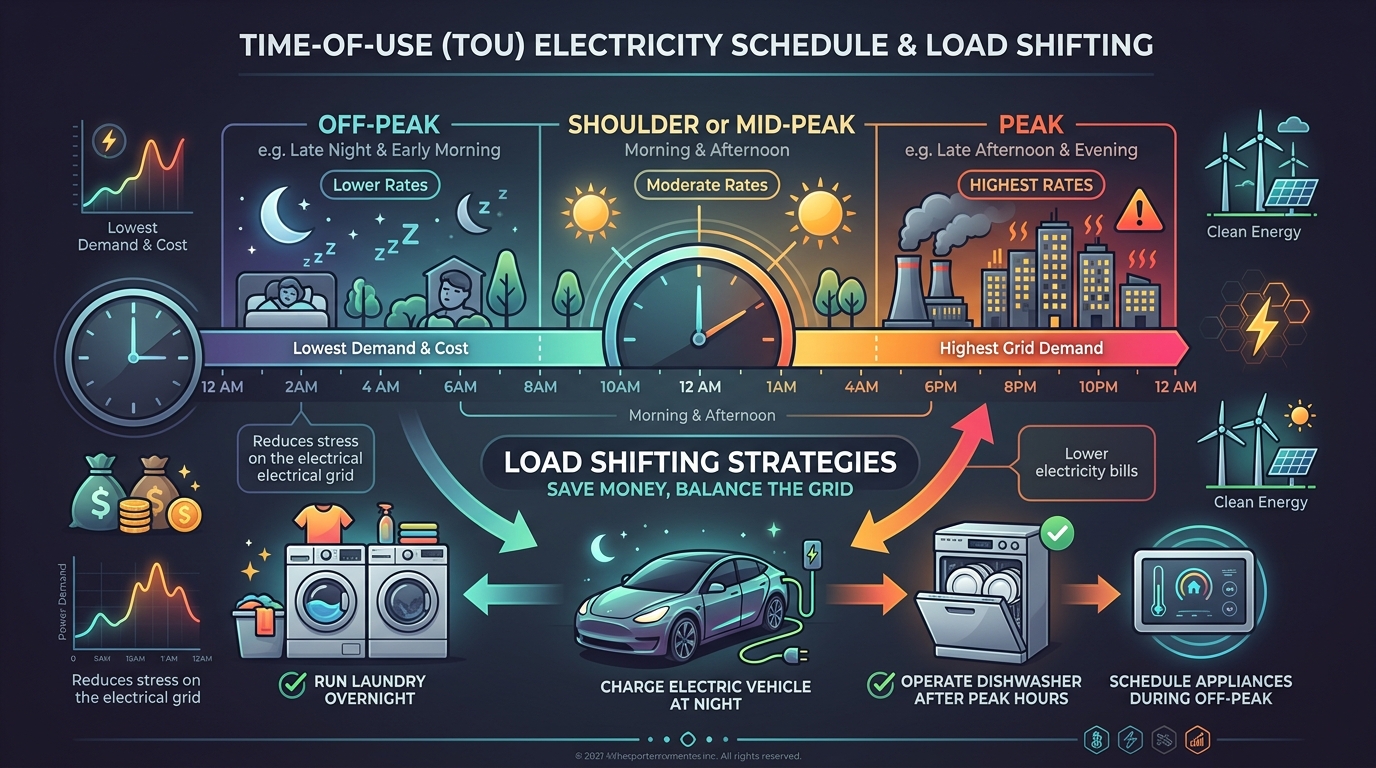
Under Time-of-Use (TOU) utility rate plans, electricity prices fluctuate throughout the day based on total grid demand. Peak hours generally occur on weekdays between 4 PM and 9 PM, when commercial operations overlap with residential cooking and air conditioning. Off-peak hours during late nights and early mornings often cost less than half the peak rate.
You can capture these spread savings by scheduling high-draw appliances to operate outside peak windows:
Targeted Upgrades That Deliver Rapid Payback
When you are ready to invest capital into your property, prioritize hardware improvements with verified returns on investment:
- Smart Thermostats: Smart learning thermostats automate temperature schedules, track occupancy patterns, and integrate with utility demand response programs. Average households save 180 dollars per year. Check your electric utility portal before purchasing, as many providers offer instant rebates between 25 and 100 dollars on Energy Star certified devices.
- Air Sealing and Weatherstripping: Air leakage through window frames, exterior door thresholds, and attic access hatches can allow up to 25 percent of conditioned air to escape. Applying silicone caulk around window frames, installing foam outlet gaskets on exterior walls, and renewing door sweeps costs under 40 dollars and delivers immediate comfort and bill reduction.
- Window Tint Film: In hot climates, applying ceramic heat blocking film on west and south facing glass surfaces deflects solar heat gain before it enters living areas, noticeably reducing air conditioning workload.
- HVAC Filter Maintenance: Operating with a clogged air filter chokes airflow, forcing blowers to consume extra electricity while accelerating equipment wear. Replace standard pleated filters every 60 to 90 days during peak heating and cooling seasons.
The Rate Structure Audit: How to Call Your Utility
Many homeowners remain on default flat rate electricity tiers that cost hundreds of dollars more per year than alternative rate schedules. Electric and gas utilities maintain detailed hourly smart meter interval records for your property. They can simulate your exact historical usage against every active rate tariff in their system.
Call your utility customer service line and utilize this structured script:
"Hello, I am reviewing our household utility expenses. I would like to request a formal rate structure audit based on my last twelve months of smart meter interval data. Can you run a simulation across all eligible residential rate schedules, including standard flat, time-of-use, and tiered structures, and tell me which plan would have produced the lowest annual total cost for my historical pattern?"
If the audit confirms savings under a Time-of-Use structure, request the rate switch immediately. Most utilities permit one rate change per twelve month period at zero charge.
Time-of-Use pricing is not universally beneficial. If your household has individuals working from home full-time who must run air conditioning through hot afternoons, or if you cannot delay dinner preparation, laundry, and bathing past 9 PM, a TOU plan can substantially increase your power bill. Always base your decision on historical interval data audits rather than theoretical projections.
Budget Billing and Assistance Options
If the representative confirms you are already on the lowest available rate schedule, do not end the conversation without exploring billing smoothing options:
- Levelized Budget Billing: Budget billing averages your trailing twelve months of utility usage into a predictable, flat monthly payment. While budget billing does not lower your net annual expenditure, it eliminates sudden 400 dollar winter heating or summer cooling spikes that disrupt monthly budgets.
- Income Qualified Discounts and Energy Credits: Many state utility commissions require energy companies to provide assistance programs (frequently titled CARE, FERA, or HEAP). Because qualification thresholds adjust for local cost of living and household size, families with moderate incomes experiencing recent financial changes often qualify for monthly bill discounts of 15 to 30 percent.
The Bottom Line
High energy bills do not have to be an uncontrollable monthly reality. By combining zero-cost load shifting habits, verified smart home upgrades, and a structured rate audit with your provider, you can reliably reduce your annual utility costs by 15 to 30 percent.
Take ten minutes today to call your power company for an interval audit, adjust your appliance delay settings, and verify your smart thermostat rebates. Every dollar saved on power stays in your pocket.
Explore The Complete Series
Continue optimizing your household bills with our accompanying guides:
- The Ghost Bill Solution Hub: Complete irregular bill blueprint and sinking fund automation.
- The Water Bill Survival Guide: Stop silent leaks and navigate municipal usage tiers.
- The Car Insurance Negotiation Playbook: Step by step carrier re-rating and discount capture.