Most people start with checking and savings, but there are a few other account types worth knowing about. Once you understand how money market accounts, CDs, and cash management accounts work, it becomes easier to choose the right place for each dollar.
Checking vs. Savings: What’s the Difference?
A checking account and a savings account are the two most common bank accounts, but they are built for different purposes. Checking is for spending and daily access. Savings is for setting money aside and earning a little interest.
Once you understand those two basics, it becomes easier to see where other account types fit. Some accounts are better for flexibility. Others are better for higher interest. A few are designed for people who want a mix of both.
The Checking Account is for Spending
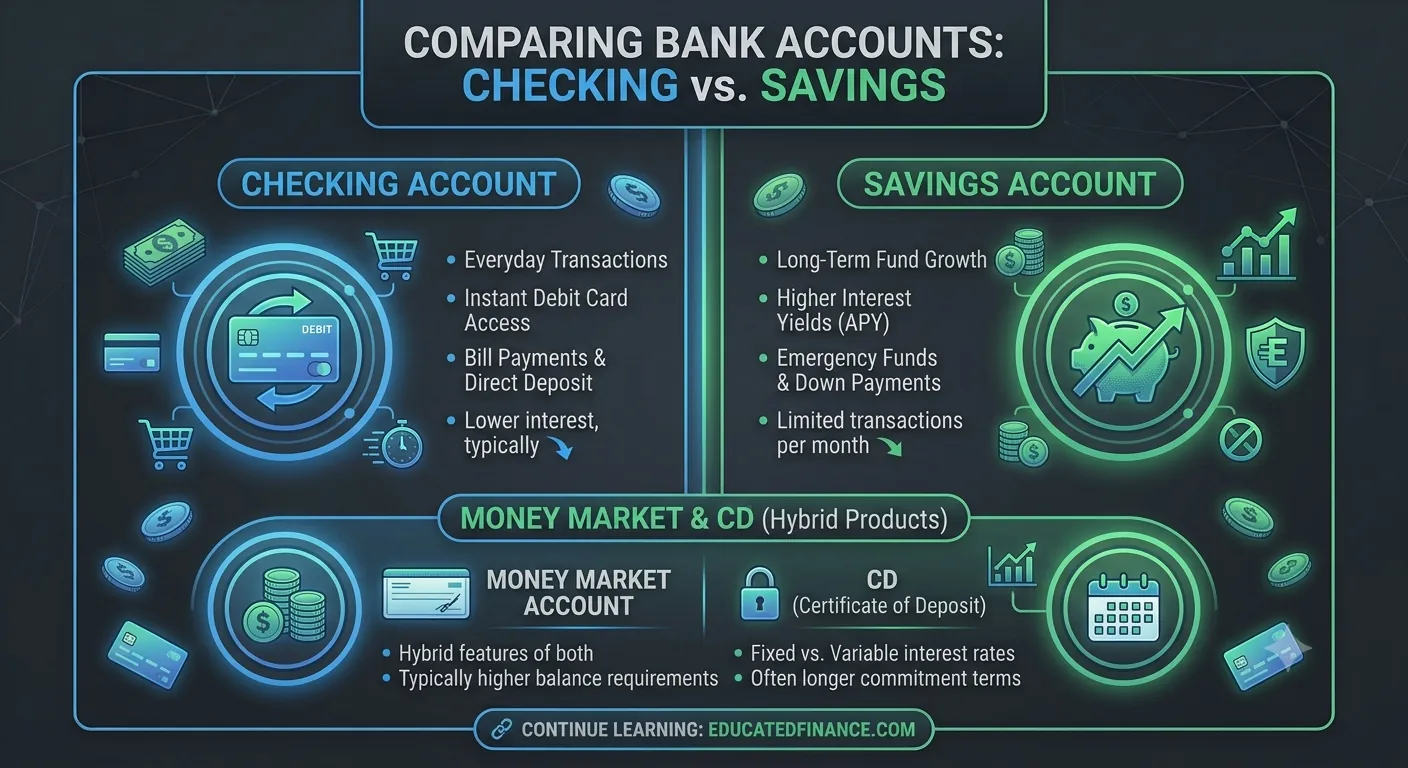
A checking account is the account most people use for everyday money activity. It is designed for frequent transactions, like buying groceries, paying rent, sending money, or covering bills.
Most checking accounts come with a debit card, mobile banking, online bill pay, and check-writing. They usually allow unlimited withdrawals and deposits, which makes them the most convenient account for daily use. The downside is that checking accounts usually earn little or no interest. They are not designed for long-term growth. They are designed to keep money moving.
Beware of Overdrafts
Checking accounts can also come with overdraft fees if you spend more than you have available. That is why it helps to keep a close eye on your balance and automatic payments.
The Savings Account is for Saving
A savings account is meant for money you want to keep separate from everyday spending. People often use savings accounts for emergency funds, vacation money, home projects, or other short-term goals.
Savings accounts usually earn interest, which is one reason people like them. The interest rate is often higher than a checking account, although still modest compared with investments. The main benefit is safety, accessibility, and organization.
Savings accounts can also make it easier to save because they are not as convenient for daily spending. That small barrier can help keep your money in place.
Money Market Accounts
A money market account, or MMA, is sort of a blend between checking and savings. It usually pays interest like a savings account, but may offer check-writing or debit card access like a checking account.
This can make it appealing if you want a little more flexibility without losing the ability to earn interest. Money market accounts often come with higher balance requirements, though, and some banks may limit how often you can withdraw.
They are often a good choice for people who want a flexible place to keep a larger balance. If you are holding emergency savings or a cash cushion and want some access without using a normal checking account, a money market account may be worth considering.
Certificates of Deposit
A certificate of deposit, or CD, is different from both checking and savings. With a CD, you agree to leave your money in the account for a fixed period of time, such as 6 months, 1 year, or longer.
In return, the bank usually pays a higher interest rate than a standard savings account. The tradeoff is that your money is locked up for the term. If you withdraw early, you may pay a penalty.
CDs make the most sense for money you know you will not need soon. They are a good option when you want a predictable return and can commit to leaving the money untouched for a while.
Cash Management Accounts
Cash management accounts are often offered by brokerages and fintech platforms rather than traditional banks. They can combine features of checking and savings, such as bill pay, debit card access, and interest on idle cash.
These accounts are convenient for people who already invest through a brokerage. They can work well as a central place to hold cash, pay bills, and keep money that is waiting to be invested.
The main thing to check is how the account works behind the scenes. Some cash management accounts sweep money into partner banks or money market funds, so the details may differ from a normal bank account.
Which Account Type Should You Use?
The right account depends on the job you want the money to do:
- Use checking for daily spending, bills, and direct deposits.
- Use savings for emergency funds and short-term goals.
- Use a money market account if you want some interest plus limited access.
- Use a CD if you can lock money away for a fixed period.
- Use a cash management account if you want banking-like features inside a brokerage setup.
There is no single best account for everything. The best setup is usually a mix.
How to Use Them Together
A simple system works well for most people. Keep your paycheck and monthly spending money in checking. Move your emergency fund into savings or a money market account. Put money you will not need soon into a CD if the rate is attractive. If you invest regularly, a cash management account may also fit into your setup.
This gives each account a clear purpose. That makes it easier to stay organized and avoid accidentally spending money that was meant for something else.
Common Mistakes to Avoid
A few mistakes come up often:
- Keeping too much money in checking and earning almost nothing.
- Using savings like a spending account and draining it often.
- Putting emergency money into a CD that locks it up too long.
- Ignoring fees, minimum balances, or withdrawal rules.
- Choosing an account just because the interest rate looks high without checking the fine print.
The best account is not always the one with the highest rate. It is the one that matches how you actually use your money.
Final Takeaway
Checking and savings are still the foundation of most personal banking setups, but they are not the only options. Money market accounts, CDs, and cash management accounts can each serve a different purpose depending on how much access you want and how long you can leave your money alone.
The best banking setup is usually simple but intentional. Use checking for spending, savings for safety, and other account types when they better match your goals.